-
-
-
-
-
-
-
Building Digital Twins for Individualized Health Care
In this episode of Pratt School of Engineering’s Dean’s Minutes, Dean Lynch and Professor Amanda Randles talk about how digital twins — advanced, personalized computational models of a patient’s body — could help save lives.
-
Vascular Blood Flow Simulations Accelerated on Intel® GPUs
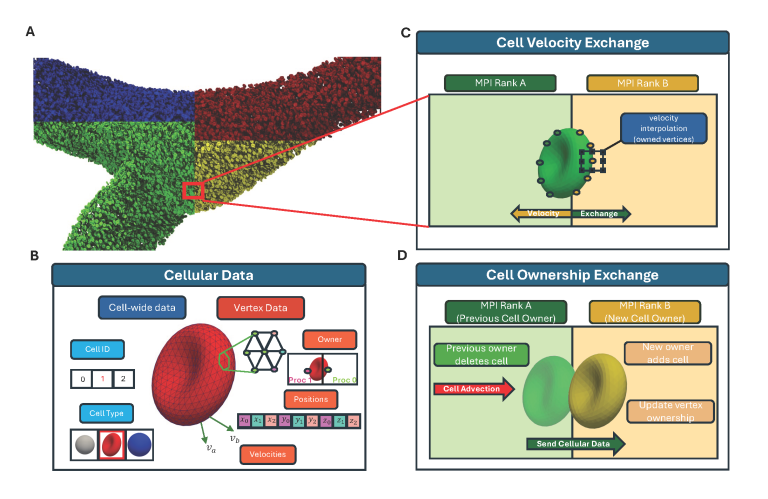
Researchers in the group led by Professor Amanda Randles developed HARVEY—a massively parallel CFD code capable of resolving patient-derived blood flow at cellular resolutions in complex vascular geometries.
-
The Pulse of HPC: Tracking 4.5 Million Heartbeats of 3D Coronary Flow
Working in Duke University’s Randles Lab, Cyrus Tanade, a National Science Foundation graduate student fellow and Ph.D. candidate in biomedical engineering, is positioned at the forefront of efforts seeking to redefine the future of medicine, and he may only be a heartbeat away.
-
Measuring Long-Term Heart Stress Dynamics With Smartwatch Data
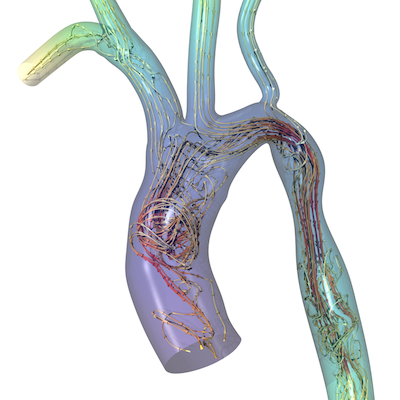
A new “digital twins” computational framework captures personalized arterial forces over 700,000 heartbeats to better predict risks of heart disease and heart attack.