A Machine Learning Framework for Arterial Health Classification using Ultrasound Vibrometry Data
Speaker: Wilkins Aquino

Speaker: Wilkins Aquino

Speaker: Dr. John Hickey, September 4 @ 3:00 PM – 4:00 PM

Speaker: Dr. Fabian Theis Register Speaker Bio Fabian Theis is a pioneer in biomedical artificial intelligence and machine learning, advancing in particular the field of single-cell and spatial omics. His work focuses on developing scalable inference methods and foundation models to integrate multimodal data across biological scales, enabling deeper insights into cellular decision-making and tissue...

Speaker: Dr. Michael Rubinstein, November 6 @ 3:00 PM – 4:00 PM

Speaker: Dr. Yang You, Virtual Event: December 4 @ 9:00 AM – 10:00 AM

Speaker: Monica Agrawal
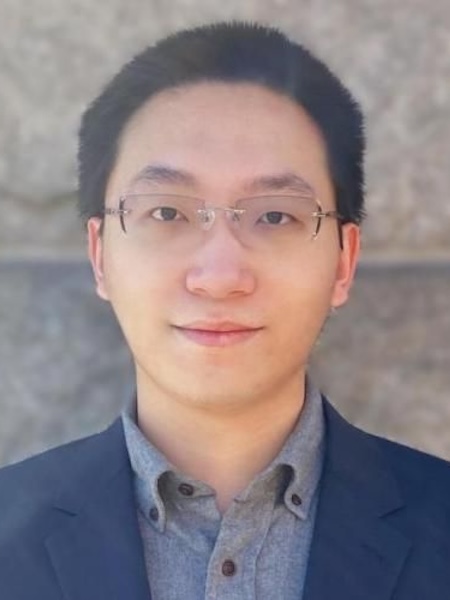
What if a machine could watch a video and write down the equations of motion? I’ll discuss our recent work toward this goal — systems that learn to discover the hidden state variables and governing dynamics directly from raw visual data. These discovered Neural State Variables and Neural State Vector Fields not only reproduce trajectories but also reveal the structure of these dynamical systems: equilibrium, stability, and chaos. The results suggest a path toward a self-driven AI scientist.

This talk will present recent advances in quantitative MRI and physics-based image synthesis as a foundation for pan-contrast AI.

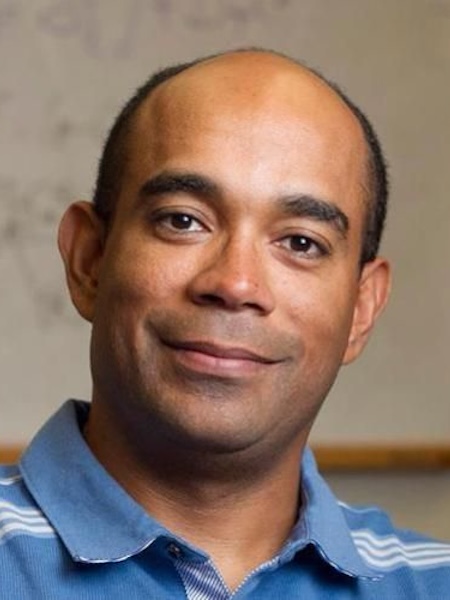
This talk will focus on a few examples of blood vessels and how understanding their motions have led to improvements in medical device development and patient care. In addition, I’ll share some of the top lessons I’ve learned as an entrepreneur.

As in-patient environments generate vast amounts of heterogeneous data, ranging from continuous physiological telemetry to sparsely sampled medical imaging, there is a profound opportunity to translate this information into actionable clinical foresight. This talk will focus on the development of novel foundation models and transformer architectures designed to handle the temporal complexities of longitudinal hospital data.

Advances in materials and fabrication concepts for soft electronics coupled with miniaturization of wireless energy transfer enables the creation of high-performance electronic and optoelectronic systems with footprint and physical properties matched to biology. This talk explores the creation of such systems and discusses applications in the context of imperceptible body-worn devices for the assessment of physiology.
