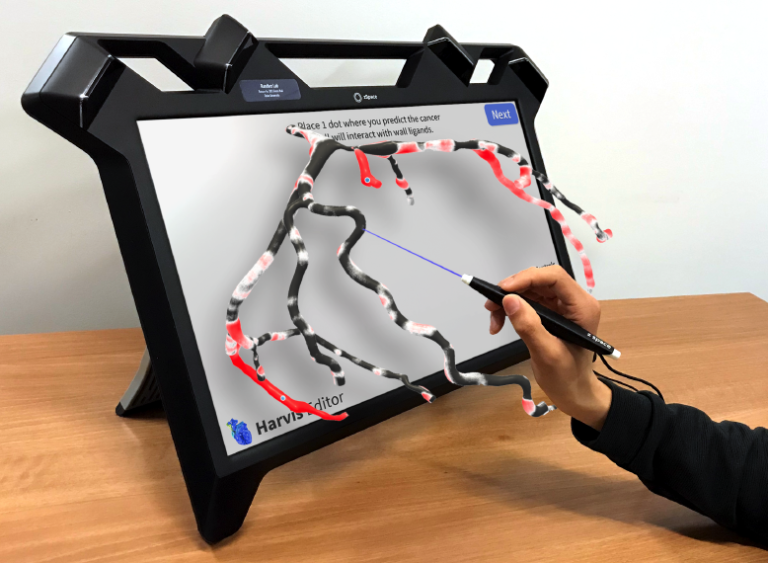
Conquering the Challenge of Simulating Blood Flow Through Adaptive Physics Refinement
Simulating how cells move through the human bloodstream requires capturing events that span enormous biological scales—from millimeter-scale blood vessels down to…
Thanks to pilot funding from the Duke Center for Computational and Digital Health Innovation, Jason Luck and his team taken a major step forward in researching youth head injuries.
Research in the Randles Lab has helped to develop individualized digital twins of patients’ unique blood flow, which enable clinicians to noninvasively evaluate the severity of coronary artery disease and guide treatment decisions.
To truly understand and treat progressive conditions like cardiovascular disease, we need more than a snapshot — we need the full picture. The pioneering Longitudinal Hemodynamic Mapping Framework (LHMF) — developed in my lab — gives us that longer, more detailed look.
Extended reality is already reshaping industries of all kinds — but its most life-changing impact may be in healthcare.
At the Duke Center for Computational and Digital Health Innovation, my colleagues and I are exploring how wearables will redefine healthcare, making continuous monitoring the new standard.