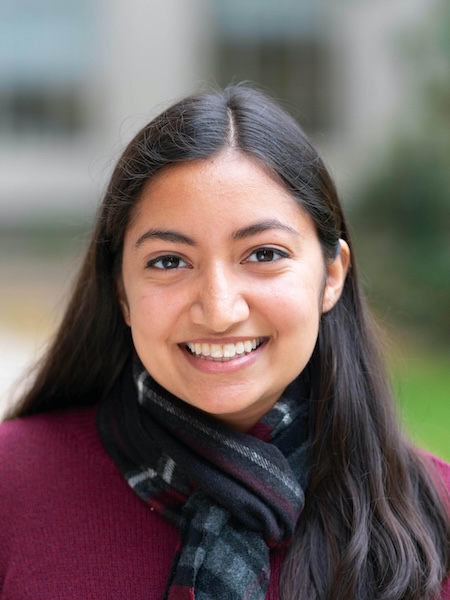
Featured Researcher: John Hickey

Center member John Hickey, PhD, is co-Associate Director of AI at the Center and an Assistant Professor of Biomedical Engineering at Duke. He’s an interdisciplinary scientist and engineer at the frontier of the biology of our cells and tissues pushing the envelope on technology development, computational tools, and cell engineering approaches to improve therapies.
John’s groundbreaking work sits at the intersection of systems biology, immunoengineering, and computational modeling, with a focus on understanding how cells behave differently — even in identical environments — and how to control those behaviors to build better therapies. His leadership will be instrumental in shaping our AI strategy, especially in harnessing machine learning to decode complex biological systems, accelerate therapeutic development, and make cell-based therapies more effective and predictable.
With his recent NSF CAREER Award and deep commitment to both translational research and community science, John brings an inspiring vision for how AI can power the future of personalized and programmable medicine.
Here’s what he’s thinking about and working on.
What excites you most about computational and digital health innovations right now?
Advances in computation are accelerating the rate of our work and allowing us to quantify biology in new ways that lead to unexpected and a great number of insights.
How did you get interested in computational and digital health?
I was teaching an Immunoengineering class during my PhD and I put together a lecture on systems biology and fell in love with these type of approaches—seeing how powerful they could be to uncover new biology and how they mirrored the multiscale and network nature of biology.
What current research are you involved in?
In the Hickey Lab, we are a diverse set of engineers and scientists solving health problems by using and developing systems biology tools and technologies to describe and control spatial relationships between cells in tissues.
While our primary goals of cellular organization are broad, as are our collaborations, we are particularly interested in applications involving cell-based therapies. While cell-based therapies have shown remarkable clinical responses in liquid cancers, their application in solid cancers and other disease settings, such as autoimmunity, infectious disease, aging, is still evolving. To maximize the efficacy of these therapies, we need a solid understanding of how these cells interact in spatial contexts and how we can control these interactions.
How do you see AI impacting or advancing your work?
We use AI in multiple ways — some to automate processes like cell segmentation or cell type annotation, or others to do things we were not able to do before like cell neighborhood analysis and building models.
What’s your outlook for the future of computational and digital health? Where do you see the field being in 10 years?
I hope we are able to collaborate with AI systems to design and execute computational analyses of large -omics datasets that are able to find consistencies across people and also identify areas for personalized medicine.
What’s something people don’t know about you?
I love spending time outside working in the yard with my family.